Abhinav Capital (ABHICAP) Q2 FY27 Profit Plunges 58% as Tax Bill Eats Revenue Gains
The NBFC's pre-tax profit grew 17% year-on-year, but a sharp jump in tax expense drove net profit down by more than half.
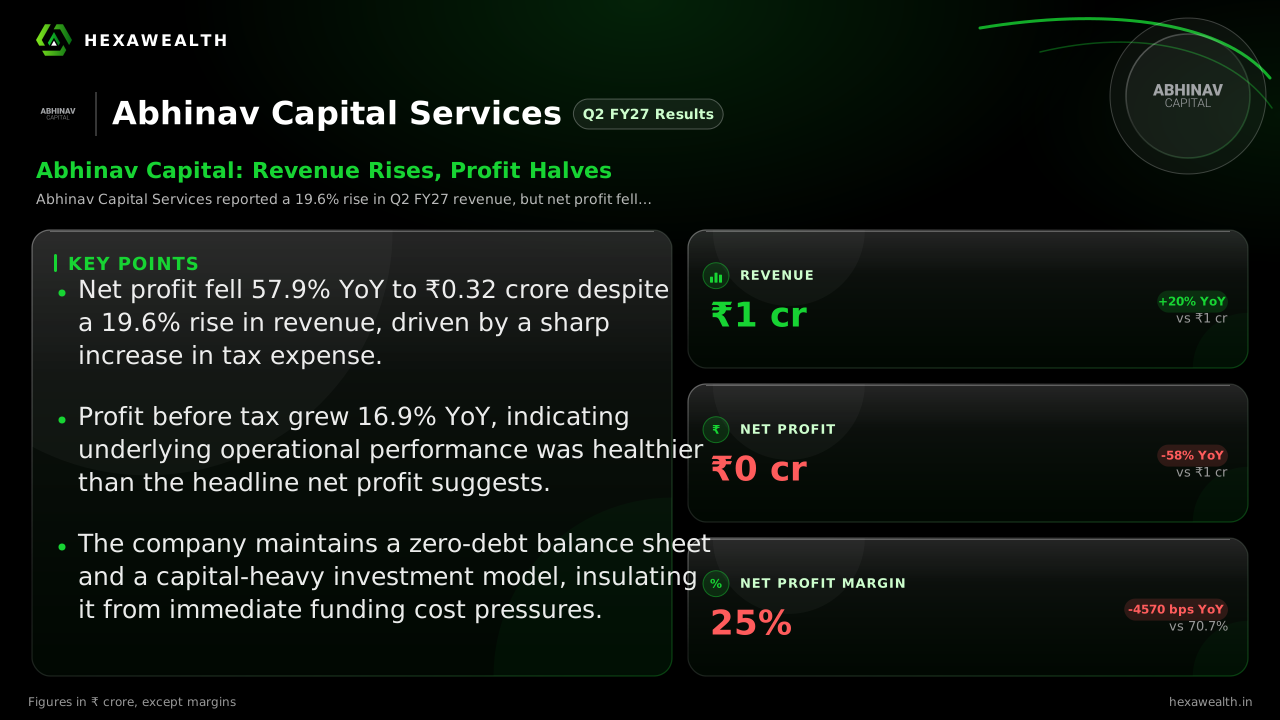
Abhinav Capital Services reported a 19.6% rise in Q2 FY27 revenue, but net profit fell 57.9%. The decline was driven by a surge in tax expense, which masked underlying operational growth.
For Abhinav Capital, the September quarter presented a stark split between its operating performance and its bottom line. The NBFC delivered solid revenue growth, but a sudden, outsized tax bill erased most of the profit.
The numbers show the divide. Revenue rose 19.6% year-on-year to ₹1.28 crore, and profit before tax grew 16.9% to ₹1.05 crore. Yet net profit collapsed 57.9% to ₹0.32 crore. The net profit margin fell to 25%, down from 70.7% a year ago.
Revenue & profit
Revenue (₹ Cr)
Profit (₹ Cr)
Net Profit Margin (%)
| Metric | CurrentQ2 FY27 | PreviousQ1 FY27 | Same quarter LYQ2 FY26 |
|---|---|---|---|
| Revenue (₹ Cr) | 1.28YoY +20% | 1.09 | 1.07 |
| Profit (₹ Cr) | 0.32YoY -58% | 0.66 | 0.76 |
| Net Profit Margin (%) | 25.0YoY -65% | 60.9 | 70.7 |
Why the bottom line collapsed
According to a report by ScanX, the entire profit drop is attributable to a tax spike. Current tax expense surged to ₹72.38 lakh from ₹13.81 lakh in Q2 FY26. This suggests the effective tax rate normalized from an unusually low base a year ago.
Operational costs were stable. Total expenses rose a modest 4.8% sequentially. The company's business model, as described by StockScans, has pivoted from lending to proprietary investments. This leaves it less exposed to the rising funding costs pressuring other NBFCs.
The tax effect and what comes next
The tax hit is likely a one-time adjustment, not a recurring operational cost. This means the underlying business, which grew pre-tax profit, may show through in future quarters if tax rates stabilize.
However, the company operates in a tightening regulatory environment. An Economic Times report notes NBFCs face margin pressure from rising interest rates. While Abhinav's debt-free structure insulates it, broader sector headwinds remain a watchpoint.
Key Points
- Net profit fell 57.9% YoY to ₹0.32 crore despite a 19.6% rise in revenue, driven by a sharp increase in tax expense.
- Profit before tax grew 16.9% YoY, indicating underlying operational performance was healthier than the headline net profit suggests.
- The company maintains a zero-debt balance sheet and a capital-heavy investment model, insulating it from immediate funding cost pressures.
Hexa Perspective
The quarter's story is one of accounting over operations. The severe margin compression stems from a tax normalization, not a business deterioration. Investors must separate the transient tax effect from the core revenue trend, which has shown sequential growth. The challenge is sustainability. With revenue still around ₹1 crore per quarter and no institutional ownership, the stock's 89% premium to the industry PE relies heavily on the stability of its investment-led income, a stream now under the microscope.
Also read
Want this applied to your portfolio?
Talk to a HexaWealth advisor, or sync your mutual fund data for insights tailored to your holdings.