Anmol India (ANMOL) Q2 FY27 Profit Jumps 4557% Year-on-Year Despite Sharp Q2 Sales Drop
The coal trader's profit surged from a low base, but revenue fell 41.5% sequentially, highlighting the volatile nature of commodity trading volumes.
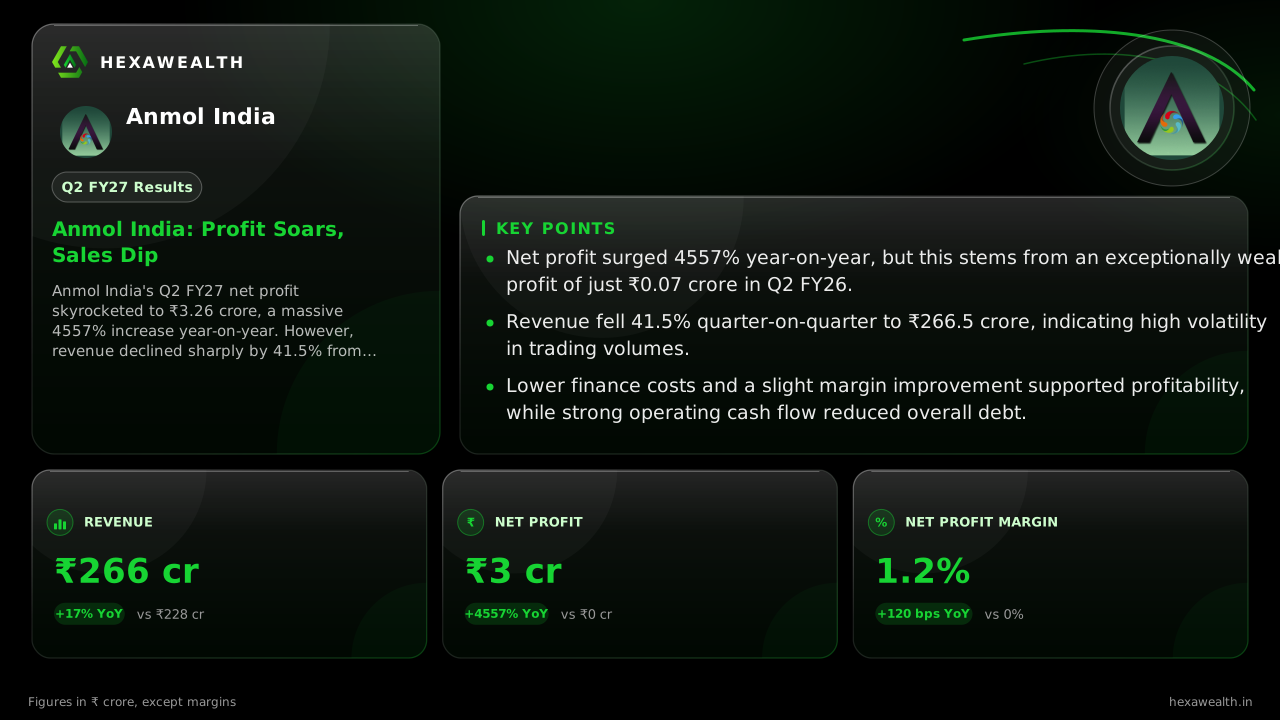
Anmol India's Q2 FY27 net profit skyrocketed to ₹3.26 crore, a massive 4557% increase year-on-year. However, revenue declined sharply by 41.5% from the previous quarter, settling at ₹266.5 crore.
For a commodity trading firm like Anmol India, quarterly performance hinges on the timing and scale of bulk deals. The September quarter delivered a stark contrast: a headline profit surge built on a weak base, overshadowed by a steep sequential drop in trading volumes.
Revenue for Q2 FY27 stood at ₹266.5 crore, up 16.7% from a year ago but down 41.5% from the ₹455.72 crore reported in Q1. Net profit reached ₹3.26 crore, a dramatic rise from just ₹0.07 crore in Q2 FY26, though it fell 45.7% quarter-on-quarter.
Revenue & profit
Revenue (₹ Cr)
Profit (₹ Cr)
Net Profit Margin
| Metric | CurrentQ2 FY27 | PreviousQ1 FY27 | Same quarter LYQ2 FY26 |
|---|---|---|---|
| Revenue (₹ Cr) | 266.5YoY +17% | 455.72 | 228.29 |
| Profit (₹ Cr) | 3.26YoY +4557% | 6.00 | 0.07 |
| Net Profit Margin | 1.2% | 1.3% | 0.0% |
Why the profit surge is a base effect
The astronomical year-on-year profit growth is primarily a base effect. The company's profit in Q2 FY26 was an exceptionally low ₹0.07 crore, as noted by reports from AlphaTribe and Arthneeti. Profitability this quarter improved as operating margins expanded 140 basis points to 1.8% and finance costs fell 30% year-on-year.
Lower interest expense, down ₹0.98 crore, contributed significantly. According to MarketPing, this was due to a ₹28.70 crore reduction in working capital borrowings during the period.
The QoQ slump and the cash cushion
The 41.5% sequential revenue decline points to volatile trading volumes, typical for the business. Despite the top-line contraction, the company generated a strong ₹105.18 crore in operating cash flow for the first half, per MarketPing.
This cash generation helped reduce debt. Total borrowings fell to ₹168.93 crore at the end of September from ₹197.31 crore earlier.
Key Points
- Net profit surged 4557% year-on-year, but this stems from an exceptionally weak profit of just ₹0.07 crore in Q2 FY26.
- Revenue fell 41.5% quarter-on-quarter to ₹266.5 crore, indicating high volatility in trading volumes.
- Lower finance costs and a slight margin improvement supported profitability, while strong operating cash flow reduced overall debt.
Hexa Perspective
Anmol India's quarter illustrates the inherent lumpiness of a trading business. The year-on-year profit leap is more arithmetic than a sustainable trend, given the negligible base. The real story is the sharp sequential revenue drop, which investors must weigh against the firm's ability to manage costs and generate cash.
The outlook is tied to commodity cycles. Reports from S&P Global and CRU Group suggest Indian thermal coal imports may rise due to low power plant inventories, which could support future trading volumes. However, with revenue down sharply from Q1's peak, the near-term trajectory remains uncertain and highly dependent on securing large deals.
Also read
Want this applied to your portfolio?
Talk to a HexaWealth advisor, or sync your mutual fund data for insights tailored to your holdings.