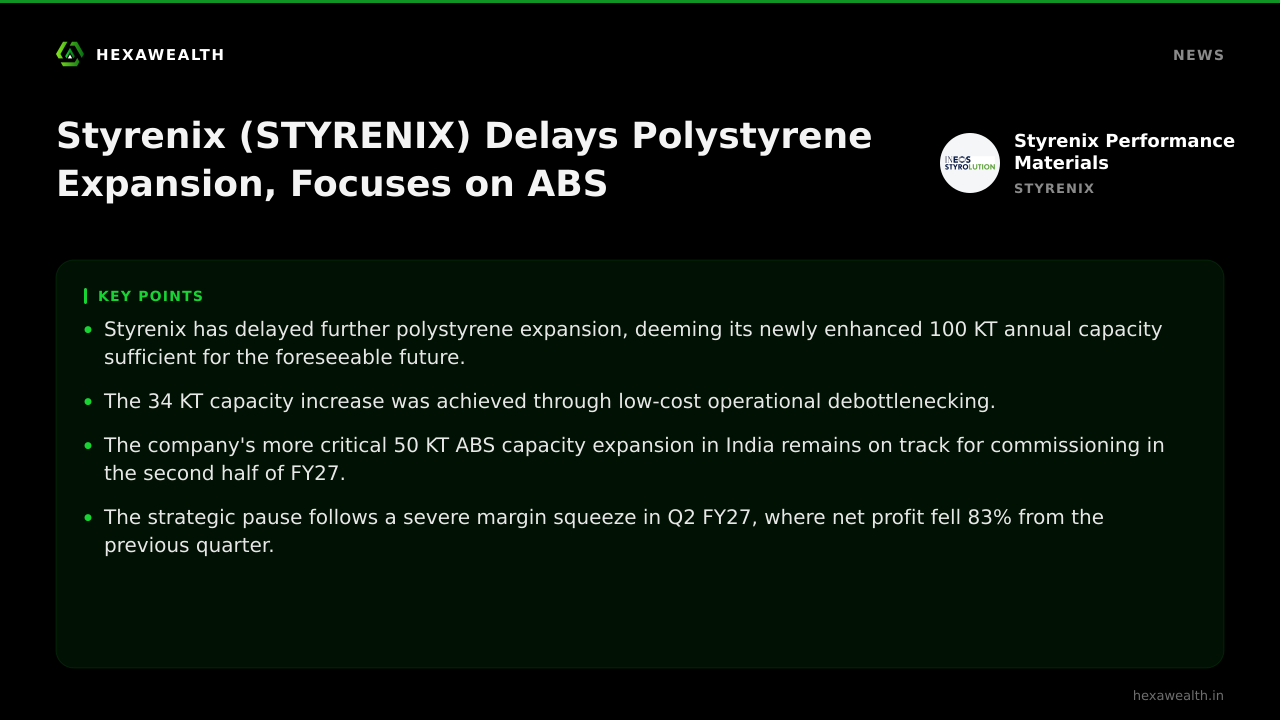
Styrenix Performance Materials is hitting pause on building new polystyrene capacity, a shift that reflects a cautious stance on market demand. The company is instead focusing its capital and execution efforts on a more strategic expansion of its ABS plastics business, which remains on schedule.
The NSE filing confirms that while the ABS capacity enhancement is ongoing, further expansion for polystyrene is delayed. The company successfully increased its annual polystyrene manufacturing capacity from 66 KT to 100 KT through debottlenecking—a low-cost method of removing production bottlenecks. According to reports from SAHI and ScanX, this approach unlocked incremental volume without major new capital expenditure. Management now considers the enhanced 100 KT capacity sufficient for current and foreseeable needs, a view shaped by prevailing market conditions.
This decision arrives after a quarter where profitability was gutted by raw material cost volatility, with net profit plunging 83% sequentially to ₹23 crore. Analysts note the company is prioritizing higher-margin, specialized ABS grades while defensively reducing exposure to more commoditized and volatile polystyrene volumes, as reported by AlphaTribe.
Key Points
- Styrenix has delayed further polystyrene expansion, deeming its newly enhanced 100 KT annual capacity sufficient for the foreseeable future.
- The 34 KT capacity increase was achieved through low-cost operational debottlenecking.
- The company's more critical 50 KT ABS capacity expansion in India remains on track for commissioning in the second half of FY27.
- The strategic pause follows a severe margin squeeze in Q2 FY27, where net profit fell 83% from the previous quarter.
Hexa Perspective
Styrenix's move is a pragmatic exercise in capital discipline during a period of earnings pressure and demand uncertainty. By halting polystyrene expansion, the company avoids locking up funds in a segment where it has already secured meaningful scale efficiently. The real test is the successful and timely commissioning of its ABS expansion, which targets import substitution in higher-value grades. For the strategy to hold, the company needs stable raw material costs and a demand recovery strong enough to absorb the new ABS capacity without further margin erosion. The delayed expansion is a signal of management's focus on preserving financial flexibility while chasing growth in its most promising segment.