A major contingent liability has been lifted from Akums Drugs, as a High Court order quashed a tax demand of over ₹734 crore against a key subsidiary. The ruling removes a significant legal overhang for the contract manufacturer, which has been reporting robust profit growth.
The Punjab and Haryana High Court quashed the assessment order, demand notice, and penalty notice issued by the tax department for the 2017-18 assessment year. According to the NSE filing, the order was received on November 28. While the specific grounds for this case are not detailed, a recent ruling by the same court, reported by Live Law Biz, shows it has barred the tax department from enforcing demands if it misses statutory deadlines after a case is sent back for reassessment.
This resolution is a clear positive, but other disputes remain. According to data from Foliopulse, other subsidiaries face a separate income tax demand of about ₹156 crore and a drug pricing penalty notice of over ₹52 crore, both under appeal. The company's annual report notes that management, based on tax counsel advice, assesses that no material loss will arise from outstanding tax matters.
Key Points
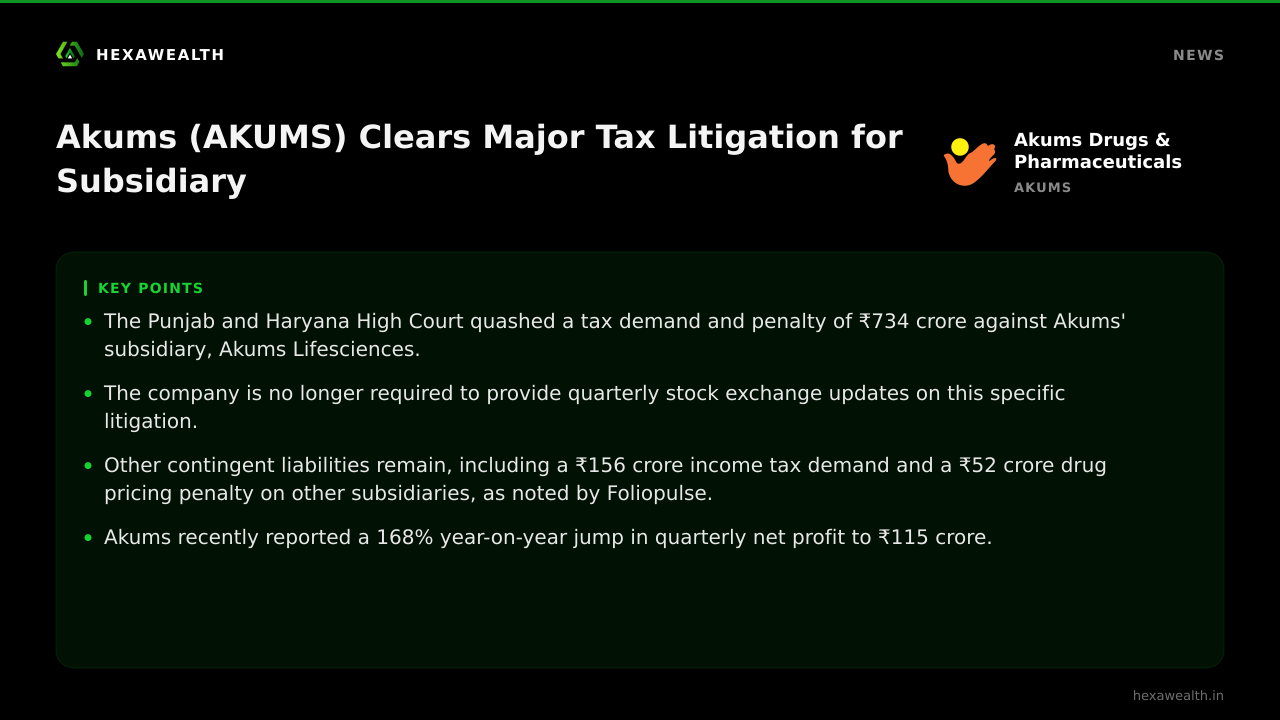
- The Punjab and Haryana High Court quashed a tax demand and penalty of ₹734 crore against Akums' subsidiary, Akums Lifesciences.
- The company is no longer required to provide quarterly stock exchange updates on this specific litigation.
- Other contingent liabilities remain, including a ₹156 crore income tax demand and a ₹52 crore drug pricing penalty on other subsidiaries, as noted by Foliopulse.
- Akums recently reported a 168% year-on-year jump in quarterly net profit to ₹115 crore.
Hexa Perspective
The court's decision is a definitive win that eliminates a substantial financial risk that had been pending for years. For a company whose recent success is built on operational execution in its CDMO business, clearing such a large, non-operational distraction is meaningful.
However, the victory is specific to this case. The broader landscape of contingent liabilities, as detailed by external research, shows other tax and regulatory disputes are still active. For the positive momentum from its strong quarterly performance to be fully sustained, the company must continue to navigate these remaining legal challenges without material financial impact. Its debt-free balance sheet provides a solid buffer, but investor confidence will hinge on the continued absence of such large, unexpected claims.