JSW Ispat (JSWISPL) Q1 FY24's Q1 Loss Widens Despite Steady Revenue
The steelmaker's net loss expanded sequentially as a weak pricing environment squeezed profitability, even as its merger with JSW Steel was finalized.
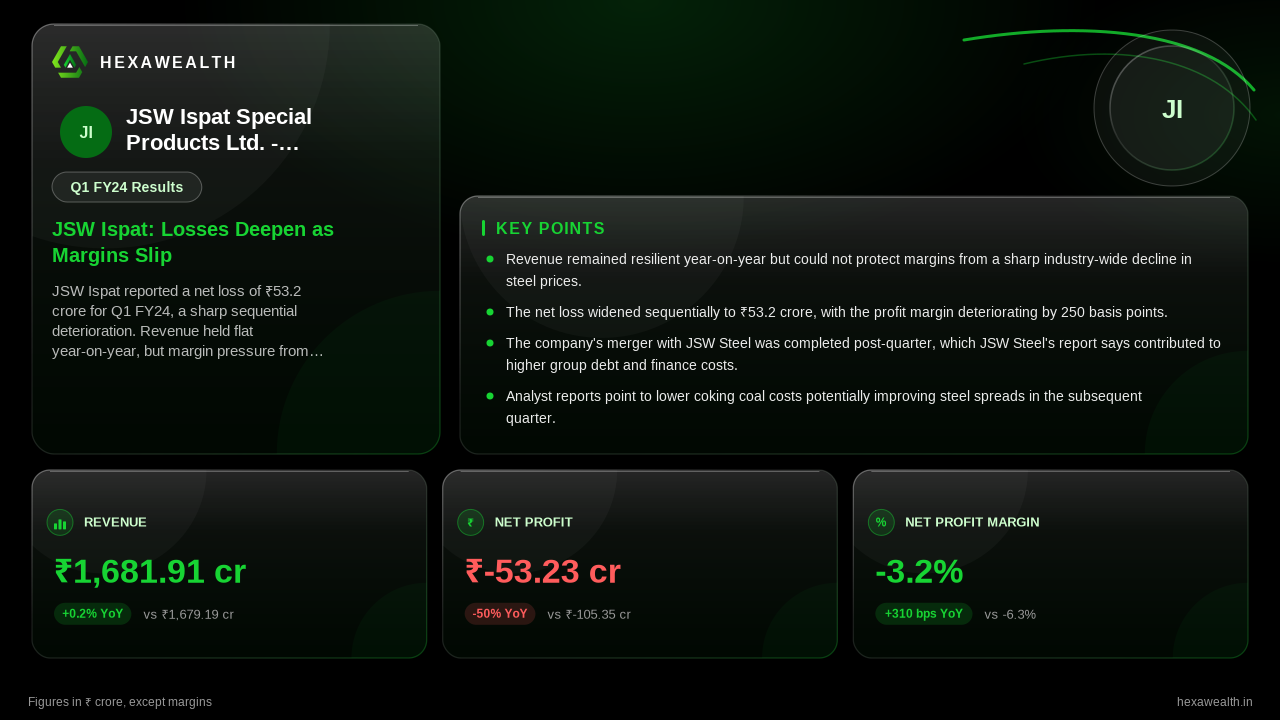
JSW Ispat reported a net loss of ₹53.2 crore for Q1 FY24, a sharp sequential deterioration. Revenue held flat year-on-year, but margin pressure from softer steel prices drove the bottom line deeper into the red.
For JSW Ispat, the first quarter was a story of stability at the top and strain underneath. Revenue held firm, but the net loss widened significantly from the previous quarter as steel prices softened across the board.
The numbers show a company treading water. Revenue was nearly unchanged at ₹1,682 crore, just a sliver above last year's ₹1,679 crore. Yet, the net loss deepened to ₹53.2 crore from ₹11.5 crore in Q4 FY23. The net profit margin slipped to -3.2%, a 250 basis point drop sequentially.
Revenue & profit
Revenue (₹ Cr)
Net Profit (₹ Cr)
- Revenue (₹ Cr), Q1 FY23: 1,679.19
- Revenue (₹ Cr), Q2 FY23: 760.44
- Revenue (₹ Cr), Q3 FY23: 1,110.33
- Revenue (₹ Cr), Q4 FY23: 1,663.64
- Revenue (₹ Cr), Q1 FY24: 1,681.91
- Net Profit (₹ Cr), Q1 FY23: -105.35
- Net Profit (₹ Cr), Q2 FY23: -209.10
- Net Profit (₹ Cr), Q3 FY23: -96.87
- Net Profit (₹ Cr), Q4 FY23: -11.51
- Net Profit (₹ Cr), Q1 FY24: -53.23
Revenue (₹ Cr)
- Revenue (₹ Cr), Q1 FY23: 1,679.19
- Revenue (₹ Cr), Q2 FY23: 760.44
- Revenue (₹ Cr), Q3 FY23: 1,110.33
- Revenue (₹ Cr), Q4 FY23: 1,663.64
- Revenue (₹ Cr), Q1 FY24: 1,681.91
Net Profit (₹ Cr)
- Net Profit (₹ Cr), Q1 FY23: -105.35
- Net Profit (₹ Cr), Q2 FY23: -209.10
- Net Profit (₹ Cr), Q3 FY23: -96.87
- Net Profit (₹ Cr), Q4 FY23: -11.51
- Net Profit (₹ Cr), Q1 FY24: -53.23
Net Profit Margin (%)
- Net Profit Margin (%), Q1 FY23: -6.3
- Net Profit Margin (%), Q2 FY23: -27.5
- Net Profit Margin (%), Q3 FY23: -8.7
- Net Profit Margin (%), Q4 FY23: -0.7
- Net Profit Margin (%), Q1 FY24: -3.2
| Metric | CurrentQ1 FY24 | PreviousQ4 FY23 | Same quarter LYQ1 FY23 |
|---|---|---|---|
| Revenue (₹ Cr) | 1,681.91YoY +0.2% | 1,663.64 | 1,679.19 |
| Net Profit (₹ Cr) | -53.23YoY +49% | -11.51 | -105.35 |
| Net Profit Margin (%) | -3.2YoY +49% | -0.7 | -6.3 |
The Pricing Squeeze
The primary driver was a tough market. Reports from MESteel and Antique Stock Broking detail a quarter of weak demand and falling prices. Hot-rolled coil and rebar prices dropped between 5-10% from the previous quarter. This compression directly hit the spreads JSW Ispat earns on its products, eroding profitability despite steady sales volumes.
A Merger in the Background
This quarter also marked the end of an era. The company's merger with JSW Steel became effective on July 31, 2023, just after the quarter closed. JSW Steel's annual report notes the merger added to its overall borrowings and finance costs. For JSW Ispat, operating as a standalone entity, a high debt-to-equity ratio of 3.21 meant interest costs remained a persistent headwind.
The immediate outlook hinges on raw material costs catching up to lower selling prices. Antique Stock Broking suggested domestic steel spreads could improve in the July-September quarter as the benefit of lower coking coal prices flows through. This potential relief is what the market is watching for now.
Live Chart
· JSWISPL
(BSE)
ISIN: INE743C01021
Key Points
- Revenue remained resilient year-on-year but could not protect margins from a sharp industry-wide decline in steel prices.
- The net loss widened sequentially to ₹53.2 crore, with the profit margin deteriorating by 250 basis points.
- The company's merger with JSW Steel was completed post-quarter, which JSW Steel's report says contributed to higher group debt and finance costs.
- Analyst reports point to lower coking coal costs potentially improving steel spreads in the subsequent quarter.
Hexa Perspective
The quarter underscores the vulnerability of standalone mid-sized steel players in a cyclical downturn. JSW Ispat's revenue base held, but it lacked the operational leverage or product mix to defend its bottom line against pricing pressure.
Its future is now tied to JSW Steel's integrated operations. The key question is how swiftly the parent's scale and supply chain can stabilize the Raigarh unit's earnings. Near-term profitability recovery depends almost entirely on a rebound in steel spreads, which remains a macro bet on demand and input costs.
Also read
Want this applied to your portfolio?
Talk to a HexaWealth advisor, or sync your mutual fund data for insights tailored to your holdings.