Aditya Birla Fashion (ABFRL) Q2 FY27's Loss Widens Despite Flat Revenue as Costs Mount
The retailer's net loss expanded to ₹376 crore in the September quarter as higher interest, depreciation, and investments in new brands pressured margins.
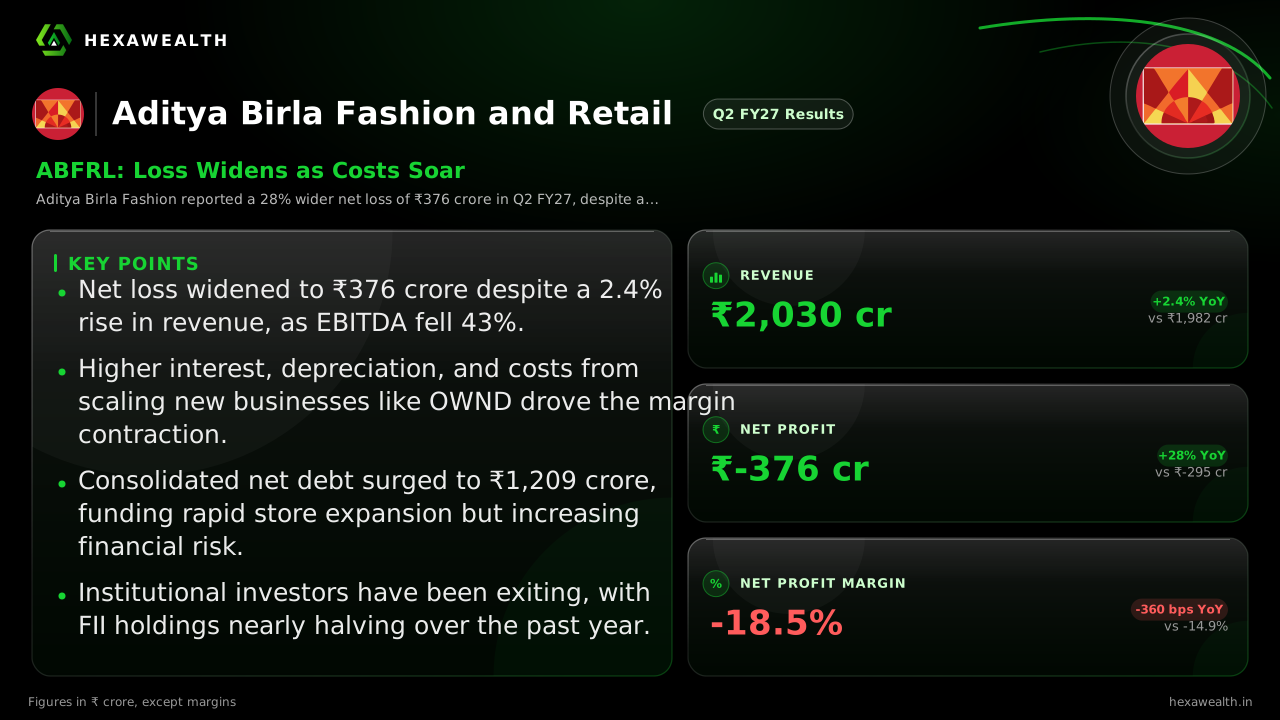
Aditya Birla Fashion reported a 28% wider net loss of ₹376 crore in Q2 FY27, despite a slight revenue increase. Profitability was hit by a 43% drop in EBITDA due to a festive calendar shift and heavy spending on new ventures.
For Aditya Birla Fashion, the September quarter was a story of spending outpacing sales. The retailer's top line inched up, but a heavy cost structure and strategic investments in new formats pushed its losses deeper.
The numbers show a clear divergence. Revenue grew 2.4% year-on-year to ₹2,030 crore. Yet, the net loss widened 28% to ₹376 crore. The net profit margin sank to -18.5%, a 620 basis point drop from the previous quarter.
Revenue & profit
Revenue (₹ Cr)
Profit (₹ Cr)
Net Profit Margin (%)
| Metric | CurrentQ2 FY27 | PreviousQ1 FY27 | Same quarter LYQ2 FY26 |
|---|---|---|---|
| Revenue (₹ Cr) | 2,030.03YoY +2.4% | 2,025.56 | 1,981.66 |
| Profit (₹ Cr) | -376.41YoY -28% | -248.73 | -295.09 |
| Net Profit Margin (%) | -18.5YoY -24% | -12.3 | -14.9 |
Why the Losses Deepened
Management, in its earnings statement cited by The Week, pointed to a shift in the festive season to the December quarter and investments in new businesses. This festive calendar change hurt operating leverage, with EBITDA plunging 43% to ₹67 crore. Established brands like Pantaloons saw flat revenue, while growth came from newer segments like ethnic wear and the digital-first TMRW portfolio.
Fixed costs rose relentlessly. Interest expense jumped 22% year-on-year to ₹152 crore, while depreciation climbed 14% to ₹369 crore. A report from ScanX Trade notes these pressures combined with the scale-up of loss-making ventures like the Gen-Z brand OWND and luxury store Galeries Lafayette.
The Mounting Debt Burden
Aggressive expansion has come at a price. The company's balance sheet shows a stark increase in leverage. According to analysis from Arthneeti, consolidated net debt ballooned to ₹1,209 crore in September 2026 from just ₹149 crore in March. This funds a store addition spree of over 80 outlets in the first half of the year.
The market's verdict has been severe, with the stock down nearly 47% over the past year. Institutional confidence has waned; data from MarketsMojo shows Foreign Institutional Investors slashed their stake from 18.6% to 10.1% over the last four quarters.
The Path Ahead
Management's focus remains on scaling its portfolio, with store expansion and brand building as priorities. The hope is that a robust festive season in Q3 can deliver the operating leverage that was missing this quarter. However, with rising input costs and a significant debt load now on the books, the path to narrowing losses appears steep.
The company must now demonstrate that its new brand investments can transition from cash-burning ventures to profitable growth engines. Until that happens, the financial strain is likely to persist.
Key Points
- Net loss widened to ₹376 crore despite a 2.4% rise in revenue, as EBITDA fell 43%.
- Higher interest, depreciation, and costs from scaling new businesses like OWND drove the margin contraction.
- Consolidated net debt surged to ₹1,209 crore, funding rapid store expansion but increasing financial risk.
- Institutional investors have been exiting, with FII holdings nearly halving over the past year.
Hexa Perspective
The quarter underscores the tension between ABFRL's growth ambitions and its current financial reality. The strategy of building multiple new brands is capital-intensive and dilutive to near-term profits. The sharp rise in net debt limits financial flexibility just as the company needs it most.
Investors are weighing whether the promised operating leverage from a delayed festive season will materialize in Q3 to offset these structural cost increases. The widening loss and deteriorating balance sheet suggest the turnaround timeline has extended, placing greater importance on immediate festive sales execution.
Also read
Want this applied to your portfolio?
Talk to a HexaWealth advisor, or sync your mutual fund data for insights tailored to your holdings.