Tata Motors Passenger Vehicles is raising prices across its lineup from next week, a move aimed at protecting its margins from stubbornly high raw material costs. The company confirmed the increase in an NSE filing, noting it will apply to both conventional and electric vehicles.
The average hike is 0.5%, but the exact increase will vary by model and variant. According to The Economic Times, the company is still finalizing the details for each trim. This follows a price increase of up to ₹25,000 across its portfolio in September, as reported by the same outlet. The company's management had signaled further hikes were likely, with CEO Shailesh Chandra telling Autocar Professional that steeper increases were being considered for the fourth quarter to protect margins.
This action is part of a broader industry trend. On the same day, Hyundai Motor India announced a price increase of up to ₹8,000 on select models, also citing rising input costs. Maruti Suzuki had also raised prices earlier in November, with a cumulative increase of a little over 1% in the first half of the fiscal year, according to The Economic Times.
For Tata Motors, the price adjustment is a direct response to a margin squeeze detailed in its recent quarterly results. The company's domestic business saw its EBITDA margin contract to 4% last quarter as it absorbed about 60% of rising commodity costs. Management had offset only 40% through prior price hikes and savings.
Key Points
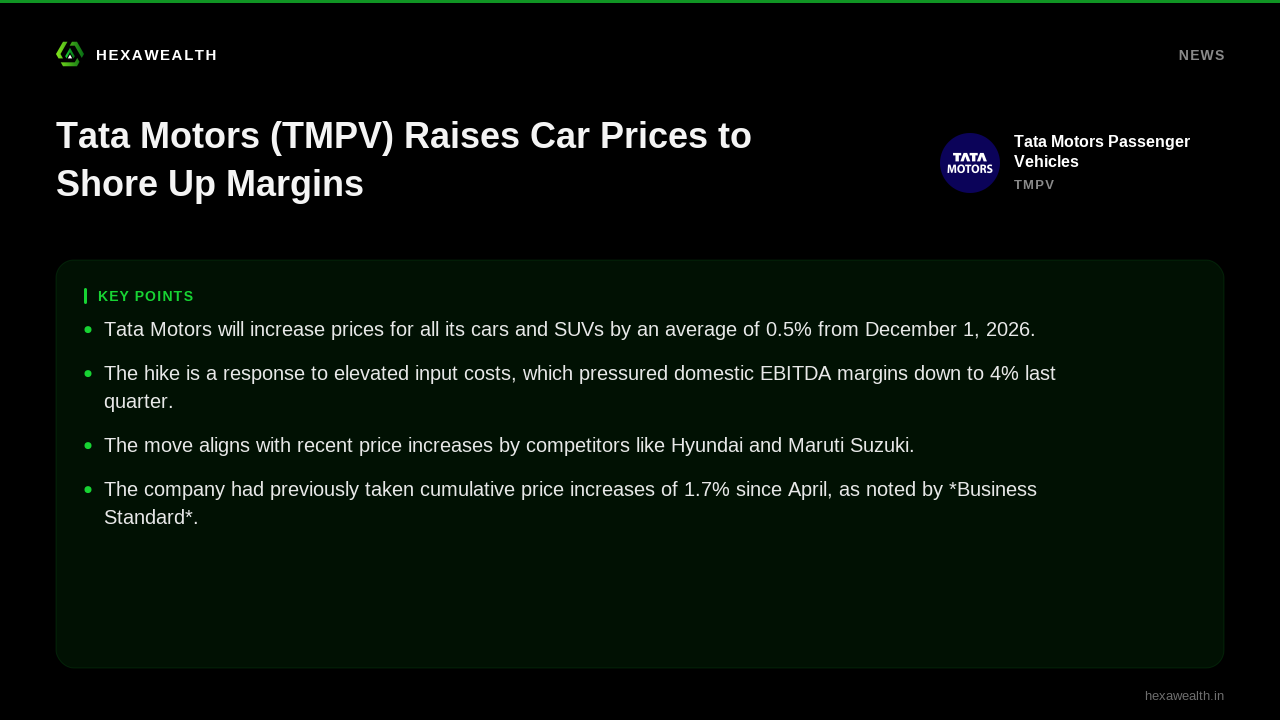
- Tata Motors will increase prices for all its cars and SUVs by an average of 0.5% from December 1, 2026.
- The hike is a response to elevated input costs, which pressured domestic EBITDA margins down to 4% last quarter.
- The move aligns with recent price increases by competitors like Hyundai and Maruti Suzuki.
- The company had previously taken cumulative price increases of 1.7% since April, as noted by Business Standard.
Hexa Perspective
The price hike is a necessary, if modest, step to defend profitability in a period where demand is strong but costs are biting. With steel prices still rising—up 7% from the last quarter's average according to CNBC TV18—the 0.5% average increase may only partially relieve the pressure that saw the company absorb most of the cost hit last quarter.
The critical factor is whether robust consumer demand, which saw domestic volumes grow 40% last quarter, remains resilient enough to absorb these incremental increases without slowing sales momentum. The company's strategy of calibrated, gradual hikes suggests it is trying to balance margin recovery with volume preservation. For the turnaround to hold, commodity costs must eventually stabilize, allowing these pricing actions to fully flow through to the bottom line.