
News

Follow Us

LinkedInInstagramX
NEWS
NewsLast updated 24 Nov 2026, 12:39 PM IST2 min read

Kshitij Polyline (KSHITIJPOL) Invests ₹650 Million in UAE Recycling Plant

Reviewed by Abhinav Swaroop, CFA, CBO Hexawealth

Kshitij Polyline is making a significant overseas investment to secure its supply chain. The plastic sheet and stationery maker will spend ₹650 million to build a recycling plant in the UAE, a strategic move to source its own raw materials and tap into a growing regional market.

The new facility will process waste plastics and e-waste into high-quality recycled sheets for stationery manufacturing. According to the NSE filing, the project aligns with the UAE’s Net Zero 2050 and Dubai Integrated Waste Management Strategy 2041. Funding will come from a mix of bank financing and equity.

This expansion comes as the company grapples with a profit squeeze at home. In the September quarter, revenue grew 34.5% year-on-year to ₹16.09 crore, but net profit fell 30.8% to ₹0.36 crore. A surge in interest and depreciation costs compressed its net profit margin to 2.2%. The company recently utilized a ₹18.98 crore rights issue, with most proceeds going to debt repayment, as reported by Minerva Capital Research Solutions.

Key Points

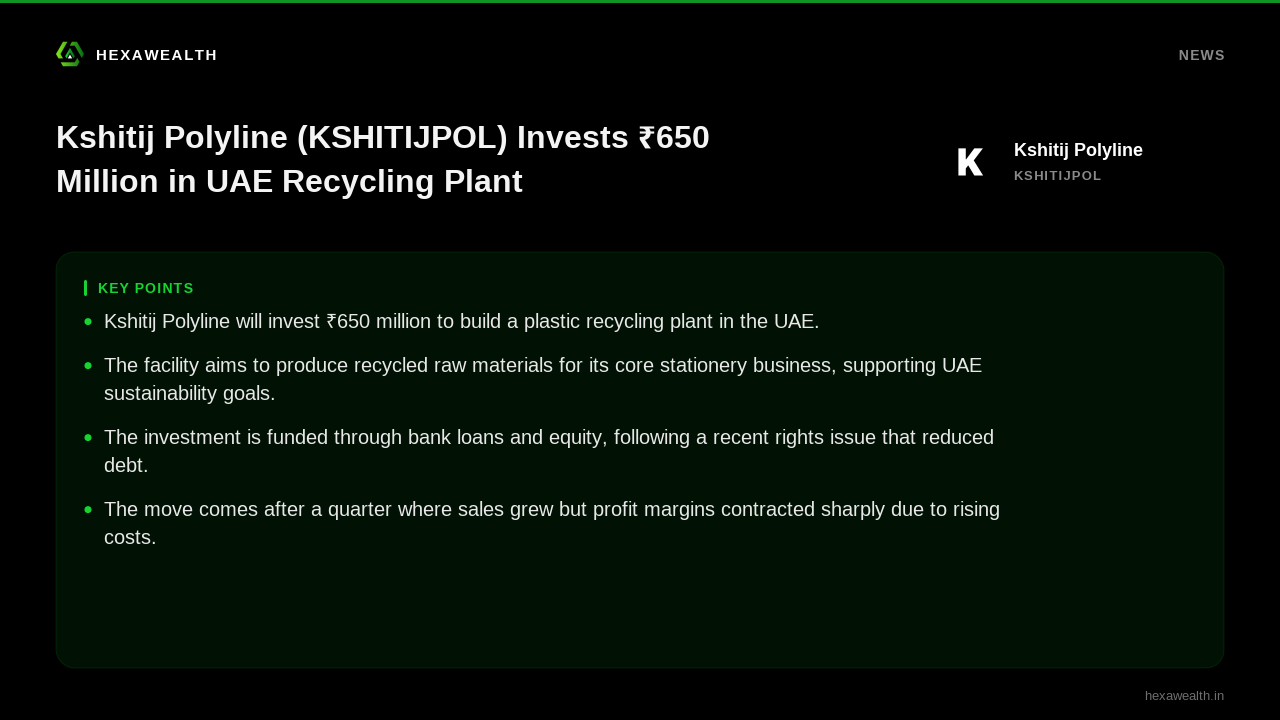
  • Kshitij Polyline will invest ₹650 million to build a plastic recycling plant in the UAE.
  • The facility aims to produce recycled raw materials for its core stationery business, supporting UAE sustainability goals.
  • The investment is funded through bank loans and equity, following a recent rights issue that reduced debt.
  • The move comes after a quarter where sales grew but profit margins contracted sharply due to rising costs.

Hexa Perspective

This is a bold pivot for a company facing margin pressure. The UAE plant could eventually insulate Kshitij Polyline from volatile raw material prices, a key challenge highlighted in its recent quarterly results. However, the investment adds new financial commitments—bank debt and likely more depreciation—to a balance sheet that was just deleveraged. The success of this bet hinges on the company's ability to execute a complex overseas project while maintaining its aggressive domestic growth target of 60-65% for FY27. For now, it’s a long-term strategic play funded with near-term capital.
Trending news


Want this applied to your portfolio?

Talk to a HexaWealth advisor, or sync your mutual fund data for insights tailored to your holdings.

Share or follow HexaWealth

Kshitij Polyline (KSHITIJPOL) Invests ₹650 Million in UAE Recycling Plant

Frequently asked questions

What is Kshitij Polyline's UAE recycling plant investment?
Kshitij Polyline is investing AED 25 million, approximately ₹650 million, to build a new recycling plant in the UAE. The facility will process waste plastics and e-waste to produce recycled raw materials for manufacturing plastic sheets and stationery.
How is Kshitij Polyline funding the UAE recycling plant?
According to the company's NSE filing, the project will be funded through a mix of bank financing and equity. This follows a recent ₹18.98 crore rights issue where most proceeds were used to repay existing borrowings.
Why is Kshitij Polyline building a plant in the UAE?
Kshitij Polyline is building the plant to secure a supply of recycled raw materials for its core plastic sheet business. The project also aligns with the UAE's Net Zero 2050 strategic initiative and Dubai's Integrated Waste Management Strategy 2041.
What was Kshitij Polyline's recent financial performance?
In Q2 FY27, Kshitij Polyline's revenue grew 34.5% year-on-year to ₹16.09 crore, but net profit fell 30.8% to ₹0.36 crore. Rising interest and depreciation costs compressed its net profit margin to 2.2%.
How did the stock market react to Kshitij Polyline's UAE plant news?
On the day of the announcement, November 23, 2026, Kshitij Polyline's share price closed at ₹3.68, up 4.55% for the session, according to data from Alphave.
What is the market opportunity for waste management in the GCC?
The GCC waste management market is a significant opportunity. Fast Company Middle East reports it is projected to exceed $104 billion by 2031, growing from $68.3 billion in 2025, driven by government strategies and increased recycling investment.