Gloster Limited is one step away from a corporate simplification that could streamline its operations. The National Company Law Tribunal’s Kolkata bench has reserved its final order on the amalgamation of two wholly-owned subsidiaries with the parent company.
According to the NSE filing, the scheme involves Gloster Lifestyle Limited and Gloster Specialities Limited merging into Gloster Limited under the Companies Act. The order is pending and has not yet been passed. The company stated it will notify the stock exchanges and update its website once it receives a copy of the formal order from the tribunal.
The Rationale for Consolidation
While the filing does not specify the benefits, the move fits a broader industry trend of companies simplifying their corporate structures. The Fabric Brief notes that similar mergers in the textile sector, like Raymond's recent amalgamation, aim for cost rationalisation and operational synergies. For Gloster, this consolidation could help improve management focus and resource utilisation across the group.
The two subsidiaries are small but profitable. The Economic Times reports that for the year ended March 2026, Gloster Lifestyle posted a profit after tax of ₹59.39 lakhs and Gloster Specialities reported ₹54.95 lakhs. Merging them directly into the parent could eliminate administrative overhead and integrate their operations more tightly.
Key Points
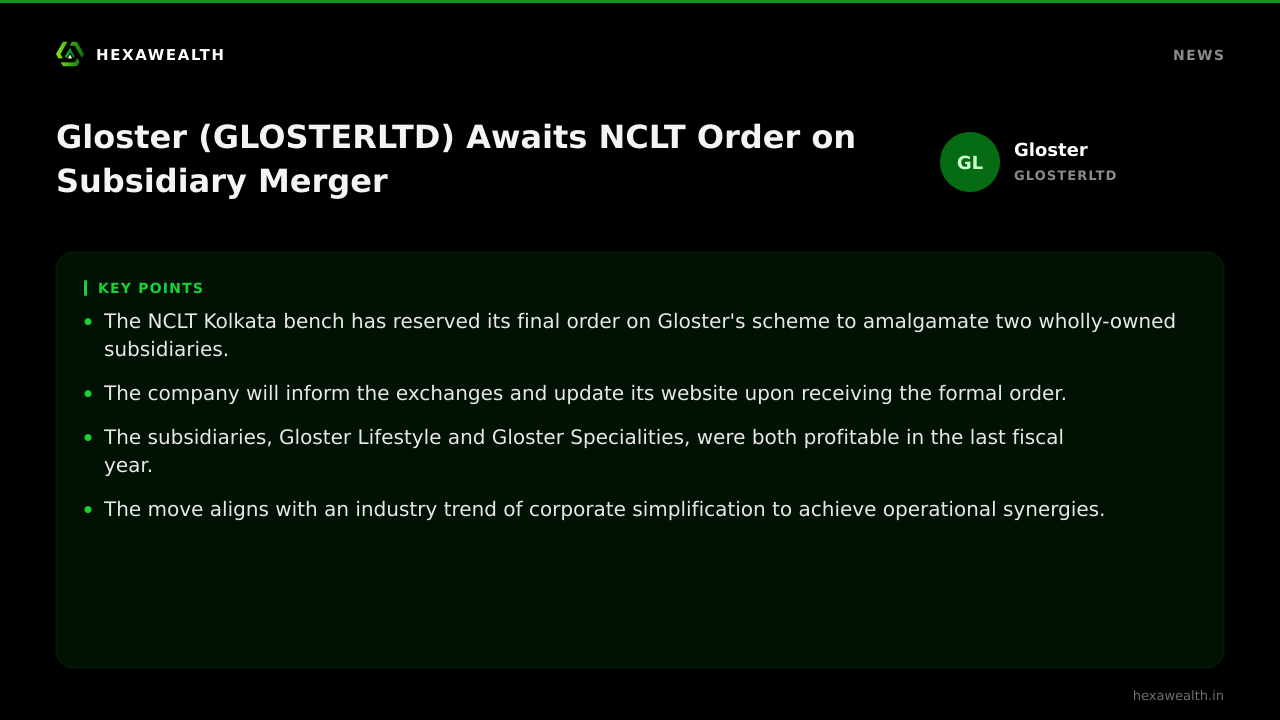
- The NCLT Kolkata bench has reserved its final order on Gloster's scheme to amalgamate two wholly-owned subsidiaries.
- The company will inform the exchanges and update its website upon receiving the formal order.
- The subsidiaries, Gloster Lifestyle and Gloster Specialities, were both profitable in the last fiscal year.
- The move aligns with an industry trend of corporate simplification to achieve operational synergies.
Hexa Perspective
This pending order represents a procedural step in a longer-term strategic cleanup. For a company where a loss-making cables subsidiary recently erased the profits of a thriving jute division, simplifying the corporate structure is a logical move. The amalgamation of two small, profitable units is unlikely to materially shift the consolidated financials, but it signals a focus on efficiency.
The real test for Gloster remains turning around its cables business or decisively restructuring it. Until that larger drag is addressed, operational tweaks like this merger, while sensible, offer only marginal relief. The scheme's success hinges on the NCLT's final approval and the company's ability to capture the intended administrative synergies without disruption.